Showing posts with label European university. Show all posts

Tuesday, September 1, 2020

why should you choose to study in Europe?

Every year millions of students aspire to study in abroad for higher studies and Europe country is one of them. If you are a dreamer with high ambition and want to fulfill your desires then, Europe would be the best one to boost your career opportunities.

Study in Europe: To boost your career to a higher level, you have to go beyond your comfort zone. If you choose to graduate from an abroad country like Europe, you would get a chance to have international experience with languages. As a result, your value as an employee would increase. One more thing to know that European countries would make a good effort to convince their foreign graduate to stay there and also giving some good job opportunities. The moral of the fact is that if you are making your higher study in Europe, there would be very strong chances for you to get a well-conducted job there and you can settle there in a long run.


Benefits to study in a European university :Most renowned European Universities having a good rank in the United Kingdom are profoundly located in Europe.

·         Oxford university ranks in number one in the United Kingdom.

·         Cambridge University also marks a good position by taking the 3rd rank in the UK.

Despite that, there isa wide range of options available for study programs in English according to your choice. Also comparing to other foreign universities stayed in the US, Canada, or Australia, the tuition fees would be very low. You can easily afford that.

·         If you are worried about getting a visa then, you should know that you can easily apply for a student visa that will allow you to visit 26 European states called as Schengen Area of Europe.

Wide range of courses: If you want to build up your career in fashion then, the best Europeantop Fashion Universities are waiting for you. You can easily do a course on Fashion Management studies from there. In this article, I will give a brief description of the fashion course.

v  Central Saint Martins is ranked first place to study the fashion design course in the UK.

v  London College of fashion is considered to be thesecond-best college in London from where you can learn fashion majors such as Menswear, Fashion Design Technology, Fashion Jewellery,etc. in a profitable range.

v  Royal College of Art is the best research universities for the fashion majors in the MA program. The duration of the course would be 2 years.

The information may help you in choosing the best Fashion Management Education for you.

Friday, July 3, 2020

Tips for Choosing the Right Sustainable Degree for Your Future Career


There are so many options that you can pick and choose from when it comes to getting your online sustainability degree. You should definitely check out the options that you have in terms of different industries that are covered and choose the one that fits your needs. Here are some of the top tips that will help you to make the right choice about which of the top business schools in Switzerland to enrol in.


Tips for Picking a Degree

You should make sure that you are thinking about the type of education you want and the focus that you are interested in like sustainable fashion Milan. There is plenty to consider when trying to make this decision, including:
  • Future potential careers you could choose from
  • Areas of study like fashion management education you enjoy
  • Whether you are going for an MBA or phd sustainability management
  • Status of the European university you are checking out
These are all important factors that will help you to make the perfect decision for your needs, so make sure that you are using them.
It can be extremely important to ensure that you are choosing the right location for your fashion management studies, especially if you want to work in a particular industry. You should make sure that they offer you the courses that you want and that it is one of the top European universities as well.

Wednesday, June 17, 2020

7 Powerful Ways to Enjoy Sustainable Travel Adventures


Being sustainable has never been more important than it is today, and people all over the world are starting to look at what they are going in their day-to-day lives and how they can make it better for themselves and the planet. However, even more, people are now starting to practice this mindset with their travel adventures.

While travelling may seem like an unsustainable pastime, to begin with, with a bit of care and mindfulness, they can actually be more sustainable than staying at home. So many countries rely on tourism for income and jobs, so instead of retreating to your house, here are seven tips on how to travel sustainably.

Choose the Right Destinations

There are plenty of countries, cities, and towns out there in the world that are showcasing sustainability as being one of their prioritises, so by visiting these countries, you’re not only helping that country to be more sustainable, but also to remain sustainable yourself.
For example, countries like Iceland, Switzerland, Costa Rica, Norway, and France are just some of the places known for being some of the most sustainable countries in the world, so support them when it comes to travelling abroad.

Be Mindful of your Travel Method

Of course, one of the main ways you can add pollution via your travels is your actual method of travelling. Planes, cars, taxis, boats, and the sorts will all cause pollution of some kind, so think before you book something.

As a rule of thumb, try to stick to public transport to move around because the more people using these, the fewer people will be driving their own cars, and the less pollution will be made. Ideally, you’ll want to avoid hiring a car or using a taxi service altogether, unless it’s a shared taxi service.


“There are plenty of sustainable accommodation places that are popping up all over the place, so rather than sticking with the traditional method of just booking the cheapest hotel out there, look for somewhere that’s being sustainably proactive” explains Sarah Farrow, a travel blogger at Online Assignment Help and Eliteassignment help.

She continues; “as sustainability rises in the public consciousness, more and more places will start emphasising what they do and how they help the planet, so keep an eye open as this will continue to be showcased.”

Buy Local, Enjoy Local Experiences

While eating well is a highlight of the travel experience for many people, trying to shop as locally as possible can be so much more rewarding and helpful to the earth. For example, staying in a self-catering accommodation and then buying your food at local markets, rather than going to supermarkets, can support the local economy and ensures low food miles.
What’s more, when you choose the activities you do, choose sustainable ones. You could replace a 4×4 off-road driving experience with a hike up the very same mountain. This point only requires you to use a bit of common sense.

Spend Money Wisely   

While on the subject of using common sense, if you’re reading this then you probably already know a bit about living sustainably, so practice this when you’re abroad. Most notably, only buy food as and when you need it to reduce food waste and try to avoid buying single-use plastics and plastic packaging where possible.

Using Electricity and Water Conservatively

“The same as when you’re at home, don’t stay in a hotel and leave all the lights on, or the shower running, or the television on as you fall asleep. Instead, be conservative, be mindful of your energy and water usage, and turn things off as soon as you don’t need them” shares Amy Turner, a journalist at Boom essays and Australian help.

Always Leave Bettering a Place

A fantastic habit to get into while travelling around is to always leave a place better than you find it. While you may not add to a problem, such as leaving litter in places, if there is litter somewhere you arrive, then pick it up and put in the bin.

Not only does this set a good example for anyone around you, but it also helps anybody else coming to the site after you become more mindful of keeping it clean and disposing of their rubbish sustainably.

Beatrix Potter is a travel writer at Dissertation Writer and Coursework Writing services. Bea writes about travelling and sustainability at home and abroad, and she also tutors at Custom Essays in AU website.

Tuesday, January 21, 2020

Unpacking Sustainability Leadership in light of the Upcoming UN Summit


UN Secretary-General António Guterres is convening a summit to commence on the 21st of September 2019 in order to hold world leaders accountable to the goals set out in the Paris agreement and to raise collective ambition by increasing climate action goals. Guterres is calling on attending leaders to demonstrate climate action leadership by only giving leaders a platform to speak if they presented plans in line with the IPCC 1.5 °C report. 

Meanwhile 16-year old climate activist Greta Thurnberg, who is also attending the summit, arrived in New York on the 28th of August, after a two-week journey on a carbon-free sailing boat. Adamant that she would not make the journey via jet fuel guzzling plane, Greta used the opportunity to display a different, but perhaps far more effective take on sustainable leadership. One that shows action speaking louder than speaking platforms.

The true definition of Sustainability leadership

Mary A. Ferdig offers a widely recognised description of sustainability leadership, often cited in scholarly works.

“Anyone who takes responsibility for understanding and acting upon complex sustainability challenges qualifies as a ‘sustainability leader’ whether or not they hold a formal leadership position or acknowledged political and social-economic influence.”

Greta Thurnberg, and many other youths, who aren’t yet old enough to own cars let alone businesses, are already displaying this understanding of sustainability leadership in the actions they’re taking toward speaking up for climate change.

The youth and sustainable leadership

The latter half of Mary A. Ferdig’s definition speaks to why the youth are so effective in their actions and also speaks to what effective world leaders will incorporate should they wish to be effective sustainable leaders. Namely that; ”rather than providing all of the answers, sustainability leaders create opportunities for people to come together and generate their own answers – to explore, learn, and devise a realistic course of action to address sustainability challenges.”

Many youths are already holding our leaders accountable to their plans and actions thus far. Take the group of youths who sued the American government for failing to protect them from the onset of climate change or the Parkland School shooting survivors in Florida, who in a matter of days, mobilised millions of supporters, thanks to Twitter, to march in protest of urgent need for gun control policies. Their action saw the first real gun legislation implemented in years.

Their drawing mass attention to the unsolved problems seems to be what sets change in motion, rather than arriving on a podium, answers in hand.  By showing acknowledgement of value shifts with the vulnerability of not having all the answers inspires communities to connect and manifest change, which is by all accounts far more successful than playing the fear based denial card favoured by some world leaders.

Greta Thurnberg didn’t stand up at the World Economic Forum and tell business leaders the globe over how to optimise their actions to solve the entire climate crisis. She stood up and spoke openly about the fearful reality of not attempting to solve the crisis. She shared her fears. Fears that echoed collective truth and inspired the desire to be part of alleviating that fear. 

What is needed from a sustainable leader?

Successful sustainability leadership can be carried out with the following approaches:

        Leading with society and the environment in mind
        Being driven by a keenness to learn, challenge and improve current situations
        Inspiring cooperation between sectors and cultures
        Setting the self aside and instead focusing on forging connections within communities to enhance their co-creation and co-production
        Casting light on as yet unanswered, but vitally important questions.
        Open-mindedness and integrity

How businesses and communities will benefit from sustainable leaders

Leaders who have faced and overcome adversity, or who, at the very least have experienced living in parts of the world where differing economic backgrounds are driving factors, are far more likely to develop socially and environmentally inclusive practices. This type of leadership paves the way for the upliftment and integration of communities. According to Global Citizen, a movement of engaged citizens who are using their collective voice to end extreme poverty, leaders with emotional ties and ethical responsibility are a high contributing factor to ending poverty by 2030.

The sustainable leadership displayed by the youths taking action, whether they hold political or social influence or not, didn’t necessarily come about because of sustainability leadership or environmental education.

Being inhabitants of this planet facing the climate threat is qualification enough to fight, what is at the heart of all things, a human rights threat.

But integrating their calls for collective social, business and political change is a complex issue. Individuals who hold a strong education in business sustainability management will be key assets in all future businesses.

Education in sustainability management is highly beneficial in preparing an individual emotionally in taking on the responsibility of navigating corporate and social change. In order to affect any meaningful change, leaders will need to view the systems of business and society as interlocking ecosystems within our environment. 

The SUMAS Sustainability Management Business School of Switzerland aims at empowering students with the confidence to carry out this responsibility and make the decisions required to right the collective course. The programs focus on delivering sound business knowledge and an intrinsic understanding of sustainable development in an innovative way.

Why we need sustainable leadership

If the leadership of the world’s governments and organization thus far has shown us anything, it is that the advancement of a singular agenda without consideration of the environment that it transpires in is in and of itself an unsustainable pursuit. 

We cannot be extricated from the societies we cohabit with or the environments we depend on. Therefor no achievement that comes about at the demise of any civilisation, culture or habitat can truly be considered an achievement.

The climate crisis no longer allows for leeway in this or any disregard of the acceptance of total interconnectedness. 

Given this context, leaders of businesses, organisations or governments can no longer be considered leaders if they operate outside of the framework of sustainability. 

Leadership without a focus on sustainability is not leadership at all.

If you are interested in using education to further your agenda of becoming a sustainability leader, take a look at the various programs that we offer.

Tuesday, December 17, 2019

5 Reasons to Study at the new SUMAS campus in Milan


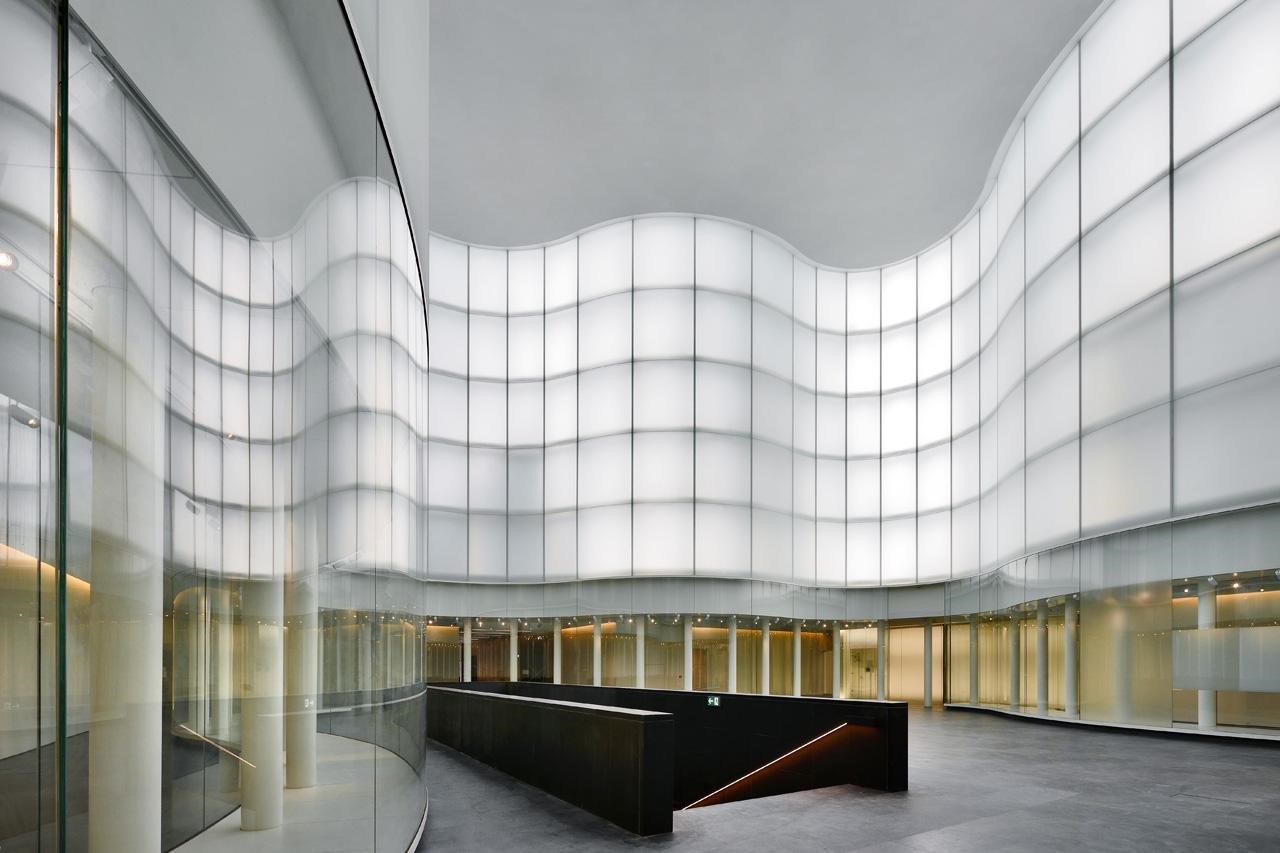
SUMAS launched its new campus on 1st December 2019 in Milan, a city known for its top quality universities, fashion and culture. The campus is located at the innovation and cultural center BASE Milan, centrally located in the fashion, art and design district of Milan.
The SUMAS campus at BASE Milan will offer the same internationally recognised (ACBSP) undergraduate and graduate programs as SUMAS Switzerland, with the addition of first hand local fashion and design market experience.
Here are just some of the reasons you should consider studying at the new campus:
1 – Milan is transitioning into a green city!
Italy is setting an example for other countries by introducing academic sustainability modules and  making it mandatory for climate change to be studied in high school curriculums. Milan, according to a 2019 article in Forbes, is “‘going green’ in a major way to fight against climate change and improve the quality of life of its 1.4 million citizens. Local authorities have announced plans to plant 3 million trees by 2030.”
Over the past few years Milan has already made great strides in incorporating greenery into the city. One such example is the Bosco Verticale, a pair of residential towers in the Porta Nuova district of Milan which have utilised thousands of trees and plants grown on the outside.

Milan’s commitment to “going green” makes it the perfect city to study sustainability.

2 – The Fashion capital of the world!
Considering Milan’s status as a fashion capital of the world, the campus is especially suited for those with interest / seeking a career in sustainable fashion. Milan holds an annual fashion week, design week and, of late, there has been more and more of a focus on sustainable fashion.


During the 2019 Milan Fashion Week, a Green Carpet Fashion Awards was held organised by Eco-Age, an international sustainability fashion consultancy. According to Lifestyle Inquirer, the event was “an Oscars-style awards ceremony for sustainable fashion,” with awards received by the likes of Valentino and Stella McCartney. The concept behind the awards: to focus on “swapping climate-destroying luxuries for ecologically-friendly fashion.”


3 – Experience a campus that is a hub for activity!The SUMAS campus at Base Milan is set to be a prominent hub for activity, ensuring all of your student needs are met, while having access to a number of facilities, events and cultural insights.
The campus includes:
  • campus accommodation for students
  • a student lounge and recreational facilities
  • an onsite bistro
  • a fashion laboratory for student practical classes on campus
  • a music recording studio on the campus for aspiring music artists


The campus is home to MUDEC (museum of cultural arts) and Google with regular activities and seminars taking place every week related to sustainability and other cultural topics such as fashion, music and art!


The Base Milan campus also provides access to many important networking initiatives and invaluable practical experiences. In fact, brands that have recently taken part in events at BASE Milan include Montcler, Gucci and Timberland.
4 – Milan is one of the best student cities in the world!
 Aside from the delicious food (think authentic pasta and pizza) and lively nightlife, there is a reason why Milan was voted one of the best student cities in the world.
Milan’s vibrant scene is not only a hub for fashion but for finance, research, media and the arts. It is home to some of the top universities in the world which means that at any given time, the city is bustling with students from Italy and abroad.
Being a hub for so many industries also gives local and international students access to incredible training, internship and job opportunities.


5 – Explore all of Europe!
 With its central location in the heart of Europe,  Milan is the perfect starting block to explore surrounding cities and countries with most European capitals accessible within a two hour flight! Milan is close to superb beaches and not far from stunning mountains for the avid skier and snowboarder! Milan is also located a quick train ride away from Switzerland, the home of cheese, chocolates and where the second SUMAS campus is located. According to SUMAS founder and president Dr. Ivana Modena, the Milan campus will not only “provide students global transfer opportunities between Switzerland and Italy during their studies” it will also “create the perfect environment for international students to work together, share ideas, and complete practical projects related to fashion, art, design, business and sustainability.”

 
For questions and more information contact: Vincent Wood, Student Recruitment Manager – vwood@sumas.ch

Wednesday, November 20, 2019

Why The World Needs Sustainability Reporting


Corporate legacy has created much of the climate issues we are facing today. For far too long, companies have been able to operate without levels of accountability. This has brought about the devastating social and environmental damages we are seeing more than ever before.

It is now more necessary than ever for corporations to be held accountable for more than mere financial performance. Consumers are increasingly no longer interested in supporting companies that are only out for their own profit margins.

Companies are also already coming up against regulatory changes, externality taxes and higher demands on corporate responsibility and transparency. As such stakeholders and investors are looking for the same level of sustainable alignment.

Why is sustainability reporting important?

     It helps to track environmental, social and governance (ESG) performance which gives businesses a better understanding of where they need to improve
     It promotes transparency and accountability with customer bases and stakeholders, which can also assist in building trust in the brand in question
     It opens doorways for optimization in sustainable development, in turn changing companies and businesses into tools to positively impact our world
     It communicates to stakeholders and investors that a corporation has intentions for long term sustainable progress
     It ensures that the environmental, social and governance (ESG) gains are strengthened and intentionally pursued
     It incentivises better practices by rewarding the companies that are performing strongly on corporate sustainability inclusion
     By making sustainability a priority, companies can actually avert potential financial risk. According to the World Economic Forum Global Risks Report released in 2018, almost half of all significant business risks are environmental.

As a society we cannot improve, prevent and successfully manage that which we do not completely understand. Just like a neighborhood can’t accurately curb and assist with crime prevention if the crimes aren’t reported, so too businesses can not improve themselves if they don’t attempt participation in the conversation towards sustainable transparency.

Companies that wish to make a genuine impact and experience a truer definition of value contribution need to utilize the various sustainability reporting frameworks currently available to their advantage.

Understanding the different frameworks

According to Greenbiz, a media and events company that advances the opportunities at the intersection of business, technology and sustainability, there are five main reporting frameworks to consider:

     CDP (Carbon Disclosure Project)
     DJSI (Dow Jones Sustainability indexes
     GRI (Global reporting initiative)
     GRESB (Global Real Estate Sustainability Benchmark)
     SASB (Sustainability Accounting Standards Board)

Greenbiz also put together this useful graphic on the comparisons between these different frameworks.


Still, in order for a business to provide the most efficient feedback, they need to focus on giving material clarity on aspects relevant to them.

For this the Reporting Exchange is a valuable tool.

The Reporting Exchange is a global knowledge platform and resource for corporate sustainability reporting. It was established by the World Business Council for Sustainable Development (WBCSD) in conjunction with the Climate Disclosure Standards Board and Ecodesk.

Its primary goal is to bring “coherence and clarity to the global reporting landscape” in what is still currently an emerging and multi-faceted field of complex requirements.

It levels the playing field by:

·         introducing common language and definitions
·         identifies relationships between requirements and reporting resources
·         highlights what is relevant to the specific business model

By understanding that the many frameworks available aren’t mutually exclusive but rather support each other, companies who focus on the reporting frameworks that offer material clarity to their unique operations will provide the most valuable picture of transparency.

The clearer businesses are able to communicate their sustainability impact in formats relevant to their interested parties the sooner they will be able to meet business objectives and grow as truly sustainable companies, and the sooner the collective landscape can benefit, learn and share on the exchange of experience and amassed knowledge.